
As your business closes its fiscal year, a clear year-end accounting checklist ensures nothing is overlooked. By confirming deadlines, reconciling records, and planning taxes early, you gain financial clarity and avoid surprises. This guide covers key year-end tasks – from preparing statements to strategic tax moves – so incorporated businesses can close the books with confidence and set up the next year for success.
Reconcile Financial Accounts
Accurate books start with reconciling every account. Before closing, match your bank statements, credit-card reports, loans, and other ledgers against your books. Look for unrecorded transactions, duplicates, or errors that could skew your income or expenses. For example, any unreconciled deposits or withdrawals should be investigated and recorded. Reconciliation ensures the trial balance is correct and provides a clean starting point for adjustments.
Accounting Checklist:
✅ Reconcile all cash accounts (bank, credit, loan, merchant accounts) to source statements.
✅ Investigate discrepancies and post missing entries.
✅ Confirm ending balances match your general ledger before closing the period.
Review Receivables, Payables & Inventory
Double-check what’s owed and owing. Aged accounts receivable (AR) can overstate revenue if some invoices aren’t collectible. Follow up on any receivables over 60 days and send final reminders or arrange payments. If any receivables are uncollectible, write them off with documentation to clean up your books. Similarly, review accounts payable (AP) to ensure all supplier bills are recorded. Paying down outstanding payables before year-end can increase deductible expenses in the current year.
If you hold inventory, conduct a full physical count at year-end. Use an accepted valuation method (like FIFO or weighted average) to value inventory for financial statements. Identify and write down obsolete, damaged or slow-moving stock so your balance sheet reflects true value.
Accounting Checklist:
✅ Issue final payment reminders for overdue customer invoices.
✅ Pay or accrue all vendor bills; where possible, settle payables to maximize current-year deductions.
✅ Write off uncollectible debts and adjust AR.
✅ Complete a physical inventory count; adjust for spoiled or obsolete goods.
Update Fixed Assets and Depreciation
Review your fixed asset register and depreciation schedules. If equipment or property was sold, scrapped, or is no longer in use, remove it from your books and record any gain or loss. Ensure depreciation (CCA) for all capital assets is calculated up to year-end. If you made qualifying capital purchases, record those costs and claimed allowable CCA. For example, new equipment or software acquired before year-end may be fully expensed under enhanced CCA rules.
Accounting Checklist:
✅ Update the fixed asset register: add new capital purchases, and dispose of retired assets.
✅ Record depreciation (CCA) for the full year, using accelerated rates where eligible.
✅ Consult with your accountant about any immediate-expensing opportunities on new property.
Prepare Financial Statements
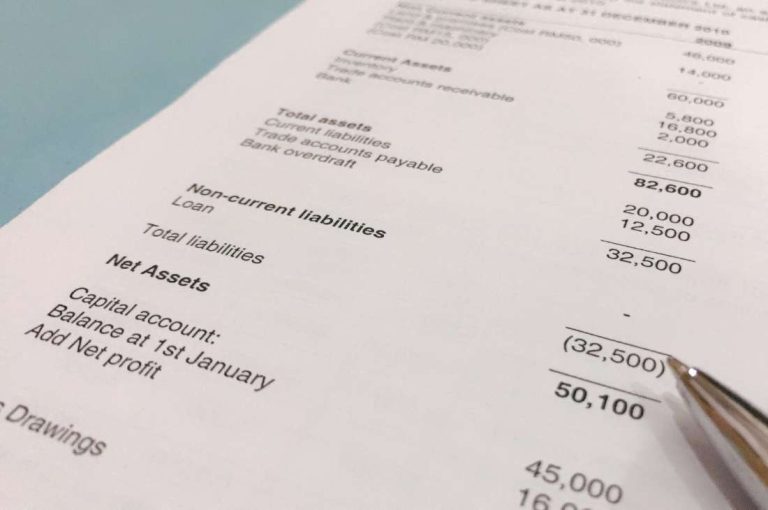
Generate your year-end financial statements; at a minimum, an income statement (profit & loss) and a balance sheet. These reports summarize your business results and form the basis for taxes and planning. Ensure all adjusting entries are posted: accruals (e.g. unpaid wages, interest) and deferrals (prepaid expenses, deferred revenue) should be accurately reflected. Review each line item for reasonableness.
It’s wise to sit down with your accountant to go through these statements. They can spot misclassifications, missing entries or compliance issues. A thorough review helps you trust the numbers when it’s time to file taxes or present to stakeholders.
Accounting Checklist:
✅ Produce year-end income statement, balance sheet, and cash flow reports.
✅ Record and review all adjusting entries (accrued liabilities, prepaid expenses, inventory valuation adjustments).
✅ Review statements line-by-line with your accounting team; correct any errors or omissions.
Payroll, HST and Year-End Filings
Finalize payroll and tax filings for the year. Be sure to issue T4 slips to all employees, and T5 slips for shareholder or investment income by the year-end filing deadline of Feb 28. T3 or T5008 slips must also be prepared where applicable. Don’t forget to reconcile and remit any payroll source deductions (CPP, EI), and ensure HST/GST returns (monthly/quarterly) are complete.
Additionally, supporting documentation for claims should be gathered and sorted appropriately: for example, maintain detailed mileage logs and expense records if claiming vehicles or home-office deductions. Good records now mean smoother CRA audits later.
Accounting Checklist:
✅ Complete final payroll remittances and CPP/EI reports.
✅ Issue T4 slips to employees, and T5 slips to investors by the last day of February.
✅ Reconcile and file any remaining HST/GST returns or instalments.
✅ Compile supporting documents for claims.
Year-End Tax Planning Strategies
With year-end figures in hand, tax planning locks in savings for the next cycle. Identify opportunities to defer income or accelerate deductions. For instance, prepaying expenses like rent, utilities, or professional fees can shift deductions into the current year. Conversely, if taxable income is lower than expected, you might defer billing or capital asset sales into next year.
Now is also a good time to review major tax credits. If your company conducts R&D, assemble the documentation for the SR&ED credit (enhanced CCPC limits apply from Dec 2024). Be sure to stay up-to-date on new investment incentives – some eligible capital purchases (like manufacturing equipment or green tech) may qualify for full expensing in 2025.
Finally, estimate your provisional income tax: work with your accountant to calculate taxable income and book any year-end tax provisions. Accurate estimates help avoid surprises and interest on any balance owing.
Accounting Checklist:
✅ Expense Timing: Accelerate deductible costs now or defer revenue into next year as cash flow permits.
✅ Asset Decisions: Buy needed equipment before year-end to claim enhanced first-year CCA, and delay selling appreciated assets until after year-end if it makes sense.
✅ Tax Credits: Ensure eligibility and claims for R&D (SR&ED) or other federal/provincial credits are maximized.
✅ Small-Business Deduction: Keep active income within the $500,000 (federal) small-business limit to enjoy the lower tax rate.
✅ Passive Income: If your investments are generating passive income, stay below $50,000 (or use planning strategies such as holding companies) to maintain access to the full small-business deduction.

Owner Compensation and Family Income
In a CCPC, owner-manager pay requires careful planning. Review your salary vs. dividends mix for optimal tax results. Salary creates RRSP room and CPP contributions, while dividends are taxed more lightly.
If family members work in the business, consider compensating them. Paying fair salaries to relatives who provide actual services not only shares income but also generates personal tax credits and CPP/RRSP benefits for them. Alternatively, dividends to family-member shareholders can distribute income efficiently, subject to provincial tax-free thresholds. However, watch out for Canada’s Tax-On-Split-Income (TOSI) rules – consult an advisor to structure this properly.
Accounting Checklist:
✅ Optimize the salary/dividend mix: ensure enough salary to maximize RRSP room, and consider dividends for flexibility.
✅ Pay reasonable salaries to qualified family members for work done (to access their personal tax credits and CPP/RRSP opportunities).
✅ Confirm compliance with TOSI rules when splitting income, and document all compensation decisions.
Final Thoughts
Once the books are closed, sit down with your accounting team to set goals and budgets for the new year. Compare actual results to your prior forecasts to help understand variances and refine your business plan.
By working through this accounting checklist, Canadian small businesses can close the year with confidence. From accurate reconciliations to savvy tax planning, these steps help ensure a compliant, tax-efficient year-end and a strong foundation for next year’s success.
This article was written by the NVS Professional Corporation team, your knowledgeable Barrie and Markham accountants. The content is intended as a general guide for informational purposes only. For specialist advice tailored to your specific situation, please reach out to our expert team.
