
Canada’s manufacturing sector is entering a rare window of accelerated tax relief. Budget 2025 introduced a new immediate expensing measure for buildings and equipment used in manufacturing and processing (M&P). Businesses now have an opportunity to deduct 100% of eligible capital costs in the year the asset is first used, rather than depreciating it over decades.
This shift represents one of the most significant capital cost allowance (CCA) enhancements in recent years, designed to stimulate investment, productivity, and competitiveness across the sector.
In this article, we break down what the new immediate expensing rules mean for manufacturers and how business leaders can strategically leverage the opportunity.
Why Immediate Expensing Matters for Manufacturers
Manufacturers operate in capital‑intensive environments – whether it’s production lines, robotics, CNC machinery, or purpose‑built facilities, the upfront cost of investment is substantial. Under the existing CCA system, most business assets are depreciated slowly over many years. But immediate expensing changes the equation. By allowing a 100% deduction in the year the asset becomes available for use, manufacturers can:
✅ Reduce taxable income significantly in the year of investment
✅ Improve project ROI and shorten payback periods
✅ Free up capital for hiring, R&D, automation, and expansion
✅ Offset the financial impact of rising borrowing costs and inflation
The policy is intentionally designed to accelerate investment in modern, productive infrastructure and equipment – areas where Canadian manufacturers have lagged global competitors.
Eligible Assets for Manufacturers
The new expensing applies only to M&P assets – meaning the property must be used for making or processing goods for sale. Eligible assets include:
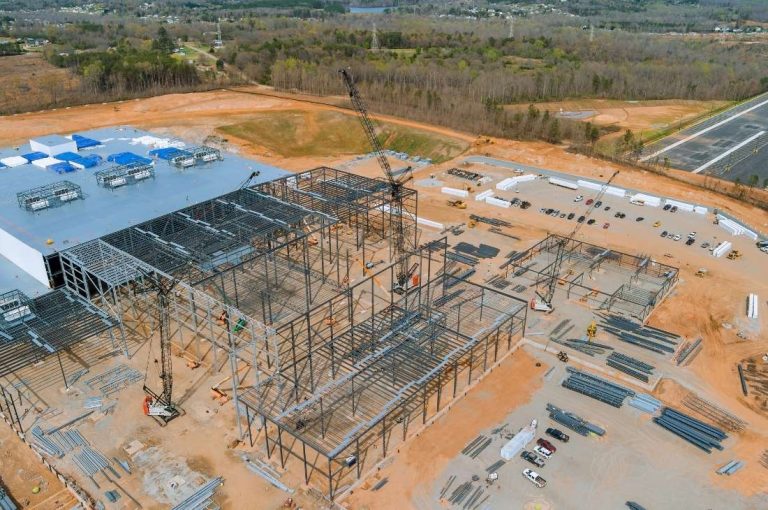
Buildings Used in Manufacturing or Processing – This includes factories, production plants, and similar facilities that are purpose‑built or substantially renovated for manufacturing. Qualifying additions or alterations to such buildings also count. This change represents a major shift. Buildings typically fall under Class 1 with a 4% CCA rate, meaning a 25‑year depreciation horizon. Immediate expensing compresses that into a single year.
Machinery and Equipment Used in Manufacturing or Processing: This includes robotics and automation systems, production lines, CNC machines, packaging and assembly equipment, specialized industrial tools and more. Generally, these assets fall under CCA Class 53 or, after 2025, Class 43.

Immediate Expensing Eligibility Rules
✅ 90% Usage Test: At least 90% of a building’s floor space must be devoted to M&P activities. (For equipment, it must be used primarily in production.)
✅ Ownership: The deduction can only be claimed by the corporation that owns and operates the property. If your operating company leases a factory or machine from a separate holding company, the operating company should be the one claiming the write-off.
✅ Arm’s-Length Acquisition: The property must be new to your business. It cannot be previously owned by the taxpayer or a non-arm’s-length person, and must not be acquired via a tax-deferred transfer.
In short, the incentive is aimed at new capital investments in manufacturing facilities and equipment that will be used in active production. Office space, retail distribution centers, or equipment used for research or administration generally do not qualify (unless they are integral to the manufacturing process).
Immediate Expensing Timeline, Phase-Out and Recapture
The 100%-expensing deduction is temporary and tied to Budget timelines. To capture the full benefit, your new building or machine must be acquired on or after Budget Day 2025 (Nov 4, 2025) and first used before 2030.
If use begins later, the deduction is gradually reduced. Assets first used in 2030-2031 get a 75% write-off in Year 1; those used in 2032-2033 get a 55% write-off; no enhanced deduction applies for assets first used after 2033.
If a building or machine that received immediate expensing is later sold or converted to non-manufacturing use before 2033, the government will recapture part of the deduction. In practice, this means you may need to include some of the previously deducted amount back into income if the asset’s use changes. Manufacturers should keep this in mind when planning long-term asset use or disposal.
Tax Benefits and Cash-Flow Impact of Immediate Expensing
This expensing measure is essentially a front-end loading of deductions. The immediate benefit is large tax savings and improved cash flow in the first year of an investment. By compressing 100% of depreciation into Year 1, businesses pay far less tax up front compared to the old, slower CCA schedule.
Example: Suppose a manufacturer builds a $5 million factory. Under the old 4% Class 1 CCA rate, only $200,000 would be deductible in the first year, yielding approximately $53,000 of tax savings (at a combined federal and Ontario tax rate of 26.5%). With 100% expensing, the full $5 million is deductible immediately, yielding roughly $1.3 million of tax relief in Year 1.
Immediate expensing also makes business decisions more flexible. Instead of timing purchases to maximize tax deductions, companies can buy machinery or expand facilities based purely on operational need, confident that the tax deduction will be available once the asset is put into use. It also strengthens arguments for taking on new projects that were marginal under older tax rules.
Ontario’s Manufacturing Incentives
In addition to the new federal immediate expensing rules, Ontario offers the Ontario Made Manufacturing Investment Tax Credit (OMMITC), a refundable tax credit for investments in manufacturing property. Notably, in the 2025 Ontario Budget, the government boosted this credit from 10% to 15% for qualifying CCPCs between May 15, 2025 and Dec 31, 2029. There will also be a new 15% non-refundable credit for non-CCPCs over that same period. The OMMITC applies to similar expenses as the immediate expensing rules – construction or purchase of factories (Class 1) and purchase of manufacturing machinery (Class 53/43(a)).
This means that an Ontario manufacturer investing in a new plant can stack incentives: they get the immediate federal write-off and a 15% provincial credit. For example, a CCPC spending $10 million on a new manufacturing facility could reduce federal taxes by ~$2.65 million in Year 1 via immediate expensing, plus claim an Ontario credit of $1.5 million (subject to limits). Such powerful incentives are meant to offset construction costs and encourage firms to locate major projects in Ontario.
Final Thoughts
The cost to upgrade production facilities and equipment can be prohibitive for many businesses, especially as AI, robotic automation and smart factory technology continue to change the manufacturing landscape. Canada’s new immediate expensing rules reduce the upfront financial barrier and allow manufacturers to accelerate planned capital projects, modernize aging facilities and invest in automation and productivity enhancements. With a multi‑year window and broad eligibility for buildings and equipment, the measure can significantly reduce the after‑tax cost of capital projects.
Manufacturers that plan ahead, aligning investment timelines, tax strategy, and operational needs, stand to benefit the most. For businesses considering major upgrades or expansions, the next few years may be the most advantageous time in decades to move forward.
Frequently Asked Questions
Q: What is “immediate expensing”?
A: It’s a tax rule that allows manufacturers to deduct 100% of the cost of certain capital investments in the first year the asset is used. Normally, businesses deduct capital costs over many years via the CCA system. Immediate expensing means the full cost goes on the tax return up front.
Q: Which assets qualify for immediate expensing?
A: Only property used directly in manufacturing or processing qualifies. This includes (a) buildings used at least 90% for production, including new factories or expansions, and (b) manufacturing machinery and equipment.
Q: How do the new rules differ from previous immediate expensing allowances?
A: Budget 2021 introduced immediate expensing for eligible property; however, only CCPCs were eligible, buildings were not included, and there was a $1.5M cap.
Q: When must an asset be acquired/used to qualify for immediate expensing?
A: Under the Budget 2025 proposal, eligible assets must be acquired after Budget Day 2025 (Nov 4, 2025) and put into use by the end of 2029. For assets placed in service in 2030 or later, the write-off drops to 75% or 55% of cost, phasing out completely by 2034.
Q: Does selling an asset affect immediate expensing?
A: If a property that was immediately expensed is sold, destroyed, or converted to non-manufacturing use before 2033, some of the previously deducted amount must be added back as taxable income (recapture). This ensures the government recovers a portion of the tax benefit if you don’t use the asset long-term in manufacturing.
Q: How does immediate expensing interact with other programs?
A: Manufacturers should coordinate capital plans with other incentives. For example, Ontario’s OMMITC (see above) provides additional tax credits on eligible investments. Also, be sure to explore SR&ED and green energy credits: some assets may qualify under multiple programs. Always track expenditures carefully to claim all eligible incentives.
This article was written by NVS Professional Corporation, your knowledgeable Barrie, Markham and Burlington accountants. The content is intended as a general guide for informational purposes only. For specialist advice tailored to your specific situation, please reach out to our expert team.
