
By selling or disposing of equipment that no longer benefits the company, you unlock value in idle assets that can be used to fund growth opportunities and drive business success.
In many Canadian small and medium‑sized enterprises (SMEs), high‑value machinery can sit unused for months or even years, quietly tying up capital while still accruing storage, insurance and maintenance fees. At the same time, Canada’s Capital Cost Allowance (CCA) rules mean you may be leaving tax benefits on the table if you simply let assets languish.
Rather than allowing these hidden carrying costs to erode your margins, a strategic “sell or write off” decision can free up working capital and crystallize tax benefits in the most advantageous year. In this guide, we’ll show you how to identify idle equipment, evaluate its true cost, and choose the path that maximizes after‑tax proceeds while fuelling your next phase of growth.
Identifying and Cataloguing Your Idle Assets
The first step to unlocking value is knowing exactly what’s sitting idle and what it’s really costing you. In many SMEs, equipment that isn’t being used still incurs storage, insurance and maintenance fees, while the capital invested in that machinery could be deployed in higher‑return activities. To gain clarity, start by defining what “idle” means for your operation. Typically, this refers to assets that haven’t been used for six months or more.
Next, build a centralized asset registry that captures all depreciable property in one place. For each item, record:
- Acquisition Details – Purchase date and total capital cost, including legal, delivery, installation and testing fees (these soft costs must be added to your asset’s capital cost under CRA rules)
- Tax Attributes – The Capital Cost Allowance (CCA) class and the undepreciated capital cost (UCC) at the start of the year
- Fair‑Market‑Value – Most recent independent appraisal or marketplace comparables
- Carrying Costs – Annual estimates for storage, insurance premiums, repairs and any seasonal re‑commissioning
A complete registry not only underpins accurate CCA calculations but also ensures you can track when an asset first became “available for use”, the CRA’s benchmark for recording additions in your CCA schedules.
With the registry in place, prioritize your list by actual cash impact. For each asset, compare its annual carrying cost against the capital tied up in its UCC balance. High‑value machines that consume significant maintenance dollars yet deliver no output should rise to the top of your action list. This cost‑impact ranking lets you focus first on assets that are not only idle but also most detrimental to your working‑capital efficiency.
Selling Your Equipment
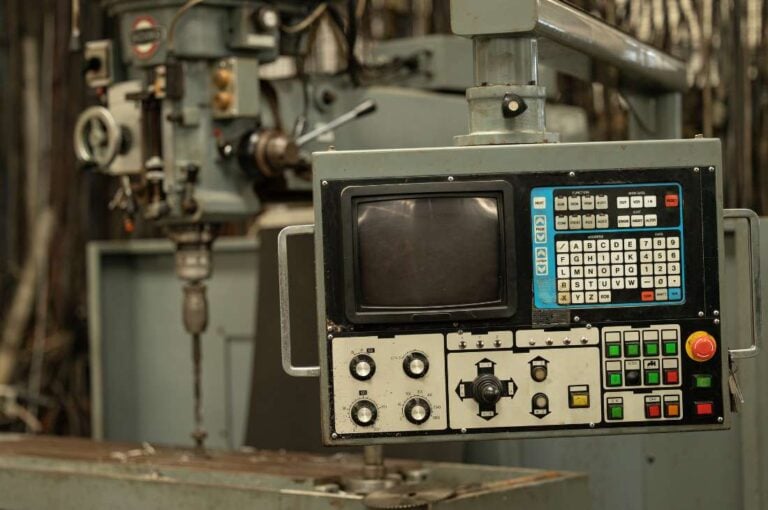
When an asset’s fair‑market value substantially exceeds its UCC, or when that piece of machinery no longer fits your strategic roadmap, selling can be the most straightforward way to unlock cash. Before listing equipment for sale, obtain a credible valuation by either conducting an independent appraisal or comparing recent transactions on industry-specific marketplaces.
In terms of taxation, the CRA requires you to compare your sale proceeds against the UCC of the asset’s CCA class. If proceeds exceed UCC, the excess amount is treated as a “recapture” of previously claimed depreciation and must be included in income in the year of disposition. Conversely, if you’ve sold the last remaining property in that class and the UCC still shows a positive balance, you may claim a terminal loss equal to the remaining UCC, fully deductible against business income in that year.
Once you’ve settled on a listing price and prepared the asset, choose the sales channel that best matches the equipment’s niche, whether that’s specialized brokers, industrial equipment exchanges, or on-site auctions. Don’t overlook outlays related to the sale (brokerage fees, transportation costs, minor refurbishments); these reduce your net proceeds and adjust the calculations for recapture or capital gain determination.
Finally, report the disposition on your corporate Schedule 47 or, for sole proprietors, in Part 4 of Form T2125, ensuring you correctly distinguish any recapture, terminal loss or capital gain. A well‑executed sale not only injects liquidity into your operation but can also create advantageous tax outcomes for that fiscal year.
Writing Off (Disposing of) Equipment
When an asset is obsolete, irreparable or carries a fair‑market value so low that disposal costs outweigh any proceeds, writing it off can be your most pragmatic option. Rather than channel time and money into trying to sell, disposal recognizes that some machinery simply no longer belongs on your balance sheet.
Begin the disposal process by engaging certified recyclers or specialized e‑waste processors, ensuring that environmental regulations are met and that you obtain formal certificates of destruction or recycling receipts. These documents are critical should the CRA ever question your claim. In some provinces, you may even qualify for rebates or reduced tipping fees when partnering with approved recyclers, turning a regulatory requirement into a modest cost-recovery opportunity.
From a tax perspective, writing off equipment typically triggers a terminal loss under Canada’s Capital Cost Allowance regime. If you dispose of all assets in a given CCA class and the UCC remains positive, you can deduct that residual UCC in full against income in the year of disposal. Unlike capital losses, terminal losses on depreciable property are fully deductible, offering an immediate tax benefit. To maximize this deduction, align disposal with your fiscal year‑end and ensure your CCA schedule reflects the class’s final balance. Properly documenting the disposal, including dates, receipts and class details, will support your terminal loss claim and protect you in the event of an audit.
Case Study: Ontario Metal Fabrication Company
Background
A mid-sized metal fabrication company based in Ontario had been facing rising overhead costs, stagnant margins, and tighter access to credit. After a mid-year internal review, the owner realized that a portion of their capital was tied up in under-utilized equipment, specifically, three large CNC machines that hadn’t been operated in over a year. The machines were originally purchased for a line of custom industrial products that the business had since phased out, and while they were still stored on-site, they were consuming thousands in insurance, storage, and periodic maintenance costs.
The Challenge
Each CNC machine had a remaining UCC, with a combined total of $150,000. One machine was still in working condition and could likely be resold; the other two were either outdated or had fallen into disrepair and would require costly refurbishment to become market-ready. Meanwhile, the business was sitting on a growing accounts payable balance and was looking for ways to free up cash and reduce its taxable income heading into year-end.
The Solution
Working with their CPA, the business evaluated all three machines. The most viable unit was listed for sale through an industry-specific equipment platform and attracted interest from a smaller manufacturer within a few weeks. The machine sold for $65,000, well above its UCC of $50,000, resulting in a $15,000 recapture of previously claimed CCA, which was added back into taxable income.
The remaining two units were deemed unfit for resale. They were transported to a licensed metal recycler, which issued destruction certificates. Because these two machines were the only remaining assets in their CCA class, and the class had a remaining UCC of $85,000, the business was able to claim a terminal loss in that amount, fully deductible against current-year income.
The Outcome
The combination of the equipment sale and the terminal loss deduction had a significant impact:
- The sale injected $65,000 of immediate cash into the business, allowing the owner to pay down key supplier balances without drawing on a credit line.
- The $85,000 terminal loss directly reduced taxable income for the year, resulting in $10,370 of corporate tax savings at the current small business tax rate.
- Eliminating insurance and maintenance costs on the unused machines saved the business an additional $12,000 per year going forward.
- The cleanup also freed up physical space in the workshop, which was later used to expand a higher-margin product line.
Final Thoughts
Idle assets can silently erode your bottom line, reducing your operational capacity and stunting your business’s growth potential. By proactively assessing underutilized equipment and acting decisively, you can improve cash flow, reduce overhead, and optimize your tax position heading into year-end. Start today by creating a registry and auditing the numbers; your next growth investment might already be sitting unused in the back of your shop.
Frequently Asked Questions
Can I claim a terminal loss on equipment that I once leased?
No, terminal losses under the CCA rules apply only to property you own and then dispose of. Leased equipment never appears on your balance sheet as an owned asset, so you cannot claim a terminal loss on it. Instead, lease payments are treated as operating expenses for the lessee.
How often should I update my asset registry?
Aim to review and update your registry at least once per quarter, and immediately after any acquisition, sale or disposal. Frequent updates ensure your undepreciated capital cost balances are accurate for CCA claims, and they help you spot idle assets before they become a drag on cash flow.
Can I write off only part of my equipment in a class
Partial dispositions reduce the class’s UCC but do not trigger a terminal loss. A terminal loss arises only when you dispose of all property in a given CCA class and the UCC remains positive. If you sell or write off only some items, recapture or capital gains may apply instead.
Should I align equipment disposals with my fiscal year‑end?
Yes, timing your disposals can maximize the benefit of a terminal loss in that reporting period. Since the loss directly reduces that year’s taxable income, scheduling write-offs just before year‑end ensures you capture the full deduction when you need it most.
Are there environmental or provincial considerations for disposal?
Absolutely. Provinces like Ontario and Alberta regulate e‑waste and metal recycling differently, and some offer rebates or reduced recycling fees for approved vendors. Before disposing of equipment, check your provincial environmental ministry’s guidelines to ensure compliance and potentially recoup some disposal costs.
This article was written by the NVS Professional Corporation team, your knowledgeable Barrie and Markham accountants. The content is intended as a general guide for informational purposes only. For specialist advice tailored to your specific situation, please reach out to our expert team.
Be sure to follow us on LinkedIn or Facebook to stay up-to-date with the latest tax, accounting and business news.
